NYSE · Packaged Foods · USD
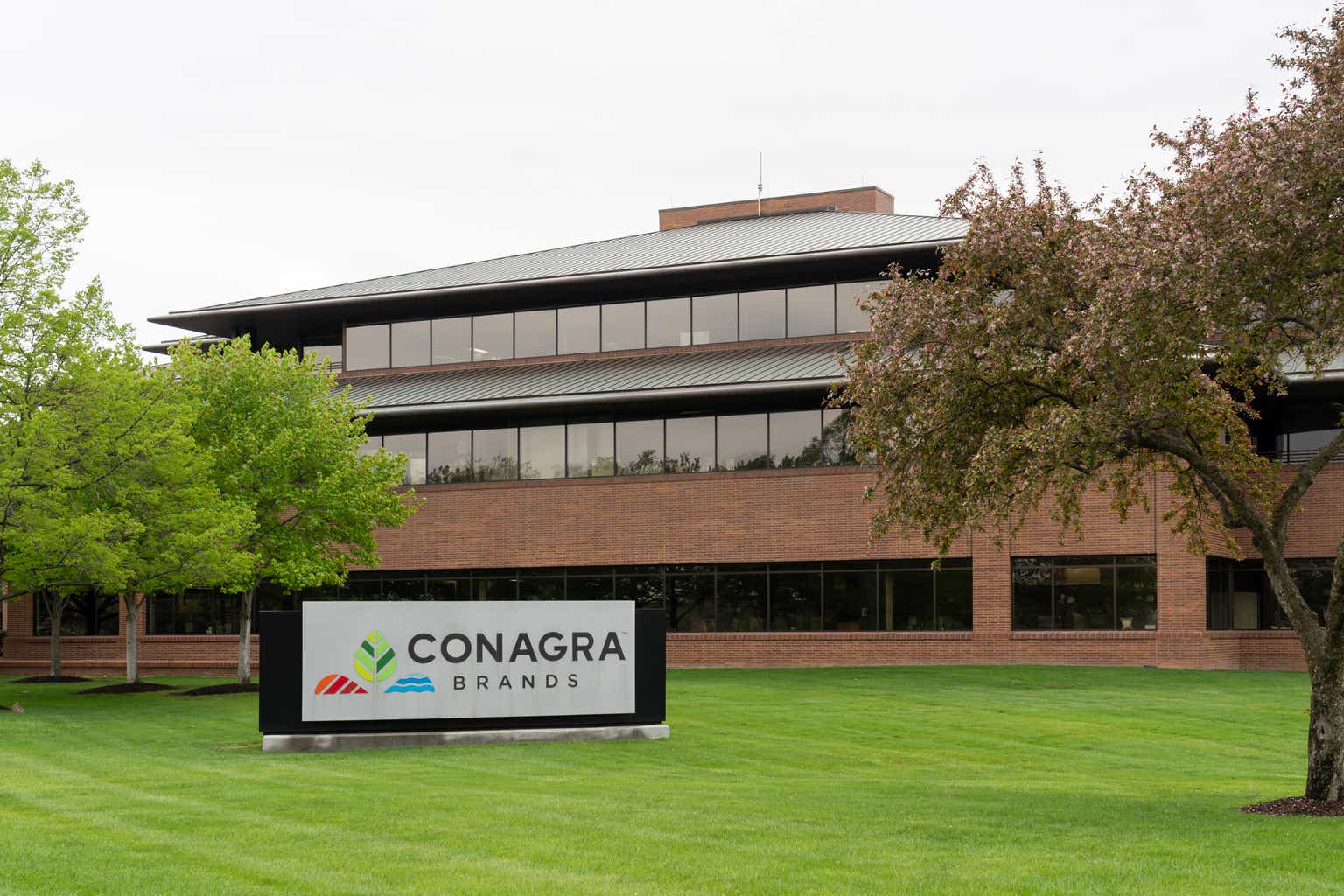
Conagra Brands, Inc. (CAG) Stock Analysis
Conagra Brands, Inc. (CAG) is a Packaged Foods stock listed on NYSE and quoted in US Dollar.
Last Updated: October 21, 2026
Price History
No price data available
Hover for the daily close. The dotted line marks the period open.
CAG Key Statistics
As of Oct 21, 2026Trading
- Open
- $14.35
- Previous Close
- $14.44
- Day's Range
- 13.94–14.38
- 52-Week Range
- 12.53–20.32
- Volume
- 7.10M
- BetaHow much the share price moves relative to the wider market. 1.0 moves in line with it; above 1.0 swings more, below 1.0 less.
- 0.00
Valuation
- Market Cap
- $6.54B
- P/E Ratio
- unprofitable
- Forward P/EShare price divided by forecast earnings for the year ahead, rather than the year just past.
- 9.15
- PEG RatioThe P/E ratio divided by the expected earnings growth rate. It puts a high P/E in the context of how fast profits are growing.
- 10.86
- P/S ratioMarket value divided by annual revenue. Useful for companies that are not yet profitable, where a P/E cannot be calculated.
- 0.58
- EPS (ttm)Profit attributable to each share over the last twelve months.
- −3.98
Financials (FY)
- Revenue (FY)
- $11.28B−2.85%
- Net Income (FY)
- −$1.92B−266.28%
- Profit marginThe share of revenue left as profit after all costs and taxes.
- −16.95%
- Shares Outstanding
- 477.41M
- 1-Year Return
- −18.63%
Dividend and dates
- Dividend
- $0.70+5.12%
- Ex-Dividend Date
- November 5, 2026
- Earnings Date
- December 18, 2026estimated
- Avg Volume
- 13.15M
Only metrics the company reports are shown. Data provided by Yahoo Finance via yfinance. Updated daily.
Key facts
As of October 21, 2026, CAG closed at $14.04, −18.63% over 1 year.
Conagra Brands, Inc. (CAG) has a market capitalization of $6.54B.
In fiscal 2025, CAG reported revenue of $11.28B.
CAG Stock Return by Calendar Year
Conagra Brands, Inc. (CAG) 10-year return: what $10,000 became
- 1 year
- $10,000 $8,137
- −18.63%
- 5 years
- $10,000 $5,442
- −45.58%
- 10 years
- $10,000 $5,551
- −44.49%
If you had invested $10,000 in Conagra Brands, Inc. (CAG) 10 years ago, at the close on October 21, 2016, it would have been worth $5,551 at the close on October 21, 2026: −44.49% in total, −5.72% a year, with dividends reinvested. A historical calculation from closing prices adjusted for splits and dividends, before fees and taxes.
Calendar-year returns computed from daily closing prices. Partial years are shown muted and marked with an asterisk.
| Year | Return |
|---|---|
| 2026 (partial year) | −14.24% |
| 2025 | −33.32% |
| 2024 | +1.46% |
| 2023 | −22.82% |
| 2022 | +17.52% |
| 2021 | −2.55% |
| 2020 | +8.70% |
| 2019 | +65.51% |
| 2018 | −41.98% |
| 2017 | −2.55% |
| 2016 (partial year) | +9.51% |
As of October 21, 2026.
CAG Revenue and Earnings by Fiscal Year
FY ends May| Fiscal year | Revenue | Net income | Net margin |
|---|---|---|---|
| 2025 | $11.28B | −$1.92B | −17.0% |
| 2024 | $11.61B | $1.15B | 9.9% |
| 2023 | $12.05B | $347.20M | 2.9% |
| 2022 | $12.28B | $683.60M | 5.6% |
| Fiscal year | Revenue | Gross profit | Operating income | Net income | Net margin |
|---|---|---|---|---|---|
| 2025 | $11.28B | $2.70B | $1.26B | −$1.92B | −17.0% |
| 2024 | $11.61B | $3.00B | $1.47B | $1.15B | 9.9% |
| 2023 | $12.05B | $3.33B | $1.85B | $347.20M | 2.9% |
| 2022 | $12.28B | $3.26B | $1.83B | $683.60M | 5.6% |
Annual figures as reported, in the company's reporting currency. As of May 31, 2026.
CAG Dividend History
Dividends per share, 2025 · 4 payments
| Year | Dividends per share | Payments | Change |
|---|---|---|---|
| 2026* | $0.88 | 3 | — |
| 2025 | $1.40 | 4 | +0.0% |
| 2024 | $1.40 | 4 | +2.9% |
| 2023 | $1.36 | 4 | +5.8% |
| Year | Dividends per share | Payments | Change |
|---|---|---|---|
| 2026 (partial year) | $0.88 | 3 | — |
| 2025 | $1.40 | 4 | +0.0% |
| 2024 | $1.40 | 4 | +2.9% |
| 2023 | $1.36 | 4 | +5.8% |
| 2022 | $1.29 | 4 | +9.4% |
| 2021 | $1.18 | 4 | +28.7% |
| 2020 | $0.91 | 4 | +7.3% |
| 2019 | $0.85 | 4 | +0.0% |
| 2018 | $0.85 | 4 | +3.1% |
| 2017 | $0.83 | 4 | +324.6% |
| 2016 | $0.19 | 1 | — |
Most recent payment: $0.29 per share, ex-dividend July 30, 2026. Per-share amounts summed by calendar year from ex-dividend dates. Partial years are shown muted and marked with an asterisk.
CAG Valuation vs Packaged Foods Median
Median of 70 stocks| Metric | CAG | Packaged Foods median | vs median |
|---|---|---|---|
| P/S ratio | 0.58 | 0.67 | 13% below |
| Profit margin | −16.95% | 2.27% | 19.2 pts below |
Medians across 70 Packaged Foods stocks that report the metric. Medians, not averages, so one outlier cannot move them. As of October 21, 2026.
Recent News
Better Dividend Stock: Kraft Heinz vs. Conagra
TIKRCan Conagra Brands Sustain Its Foodservice Profit Momentum?
YahooZacks Industry Outlook Mondelez, Conagra Brands, The Chefs' Warehouse and Mama's Creations
YahooIs Conagra Brands’ (CAG) Profit Focus With Flat Sales Reframing Its Long‑Term Investment Story?
YahooConagra Brands Showcases Dynamic Portfolio of Snacks at the 2026 NACS Show
YahooWhat Is The Market Really Pricing Into Conagra (CAG)?
Yahoo





All 20 articles ↓Show fewer ↑
Conagra’s Turnaround Is Starting to Show Up in the Numbers
MarketBeatIs Conagra Brands (CAG) Below Fair Value Following Its Earnings Beat?
YahooBarclays Maintains Overweight on Conagra Brands, Lowers Price Target to $16
BenzingaCAG Q3 Deep Dive: Margin Pressures and Simplification Efforts Dominate as Volumes Decline
YahooConagra Brands' Fiscal Q1 EPS Beat Led by Slightly Better Sales, Lower Inflation, UBS Says
YahooConagra Brands Seen in Prove-It Mode After Timing-Driven Q1 Beat, RBC Says
YahooConagra slims down portfolio while investing more in popcorn, meat sticks
Food DiveConagra Brands, Inc. Q1 2027 Earnings Call Summary
MobyConagra (CAG) Q1 2027 Earnings Call Transcript
The Motley FoolEvercore ISI Group Maintains In-Line on Conagra Brands, Raises Price Target to $14
BenzingaRBC Capital Reiterates Sector Perform on Conagra Brands, Maintains $14 Price Target
BenzingaConagra Brands, Inc. (CAG) Q1 2027 Earnings Call Prepared Remarks Transcript
SeekingAlphaConagra Brands: A 5% Yield And Low Multiple Cannot Hide A Struggling Turnaround
SeekingAlphaConagra Brands Inc (CAG) (Q1 2027) Earnings Call Highlights: Solid Start, Guidance Reaffirmed ...
Yahoo









News provided by third-party sources. Not financial advice.
Analysis
Data-derivedEvery figure above is read from this page's own data on each daily rebuild. Informational only, not financial advice. As of October 21, 2026.
Related Packaged Foods Stocks
The Kraft Heinz Company
$27.87B
GISGeneral Mills, Inc.
$17.41B
SAP.TOSaputo Inc.
CA$16.14B
SJMThe J. M. Smucker Company
$13.65B
JBSJBS N.V.
$13.35B
MKCMcCormick & Company, Incorporated
$12.46B
Popular Consumer Defensive Stocks
Walmart Inc.
$937.46B
COSTCostco Wholesale Corporation
$442.38B
KOThe Coca-Cola Company
$398.76B
PGThe Procter & Gamble Company
$364.29B
PMPhilip Morris International Inc.
$307.76B