NASDAQ · Lebensmittelgeschäfte · USD
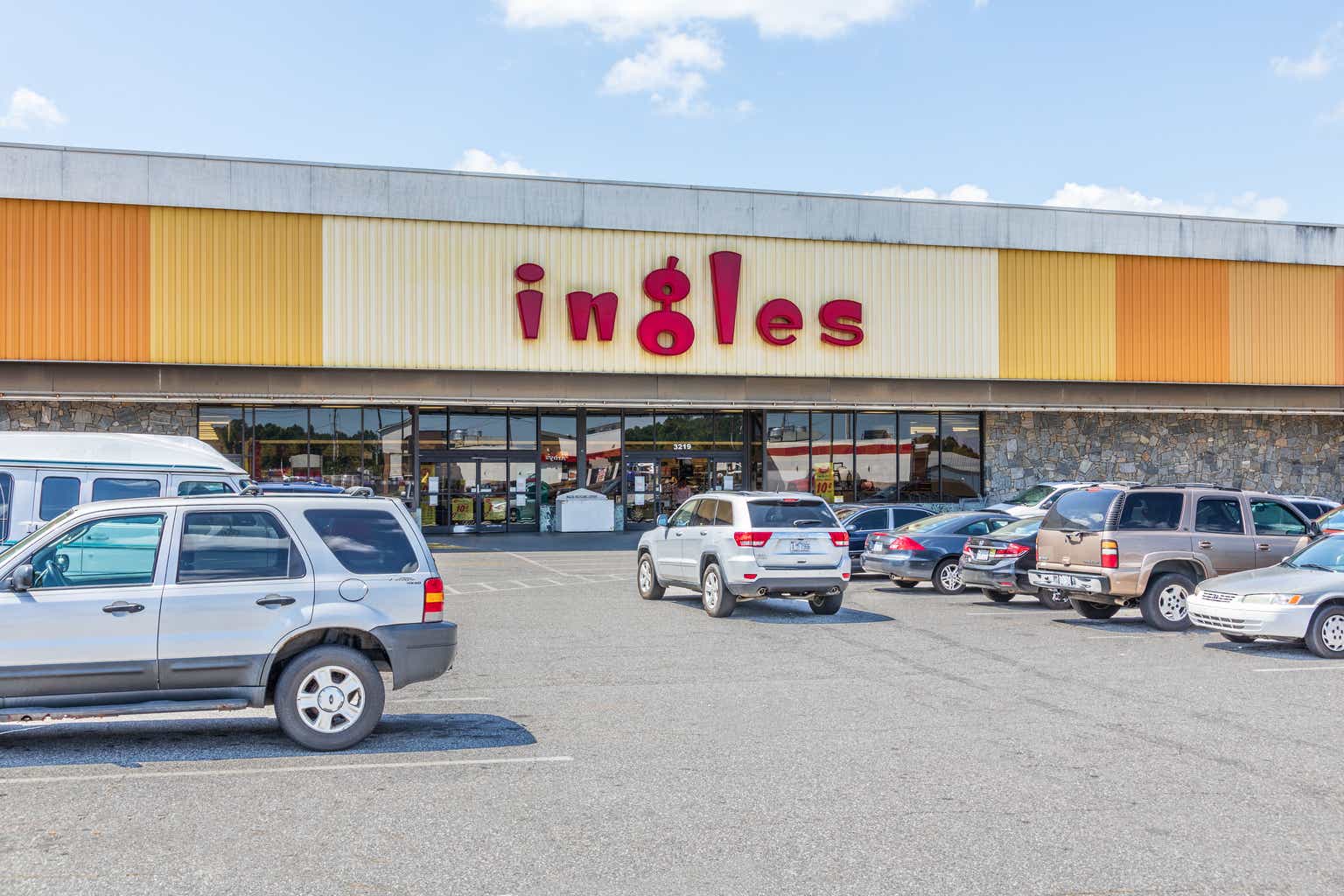
Ingles Markets, Incorporated (IMKTA) Aktienanalyse
Ingles Markets, Incorporated (IMKTA) ist eine Lebensmittelgeschäfte-Aktie, die an der NASDAQ notiert und in US-Dollar gehandelt wird.
Zuletzt aktualisiert: 21. Oktober 2026
Kursverlauf
Keine Kursdaten verfügbar
Bewegen Sie den Mauszeiger für den Tagesschlusskurs. Die gepunktete Linie markiert den Eröffnungskurs des Zeitraums.
IMKTA Kennzahlen
Stand: 21. Okt. 2026Handel
- Eröffnung
- 84,55 $
- Vorheriger Schluss
- 84,62 $
- Tagesspanne
- 83,53–85,20
- 52-Wochen-Spanne
- 67,11–95,62
- Volumen
- 106.520,00
- BetaWie stark sich der Kurs im Vergleich zum Gesamtmarkt bewegt. 1,0 entspricht dem Markt, darüber schwankt stärker, darunter schwächer.
- 0,57
Bewertung
- Marktkapitalisierung
- 1,62 Mrd. $
- KGV
- 15,56
- KGV (erwartet)Aktienkurs geteilt durch den erwarteten Gewinn des kommenden Jahres statt des vergangenen.
- 18,11
- PEG-VerhältnisDas KGV geteilt durch das erwartete Gewinnwachstum. Setzt ein hohes KGV ins Verhältnis zum Wachstumstempo.
- 0,85
- KUVMarktwert geteilt durch den Jahresumsatz. Nützlich bei noch nicht profitablen Unternehmen ohne berechenbares KGV.
- 0,30
- EPS (12 M)Auf jede Aktie entfallender Gewinn der letzten zwölf Monate.
- 5,47
Finanzen (GJ)
- Umsatz (GJ)
- 5,33 Mrd. $−5,42 %
- Nettogewinn (GJ)
- 83,59 Mio. $−20,80 %
- GewinnmargeAnteil des Umsatzes, der nach allen Kosten und Steuern als Gewinn bleibt.
- 1,92 %
- Ausstehende Aktien
- 14,55 Mio.
- Rendite 1 Jahr
- +17,91 %
Dividende und Termine
- Dividende
- 0,66 $+0,78 %
- Ex-Dividenden-Tag
- 8. Oktober 2026
- Termin Quartalszahlen
- 25. November 2026geschätzt
- Durchschn. Volumen
- 116.389,00
Es werden nur Kennzahlen angezeigt, die das Unternehmen ausweist. Daten bereitgestellt von Yahoo Finance über yfinance. Täglich aktualisiert.
Wichtige Fakten
Zum 21. Oktober 2026 schloss IMKTA bei 85,14 $, +17,91 % über 1 Jahr.
Ingles Markets, Incorporated (IMKTA) hat eine Marktkapitalisierung von 1,62 Mrd. $.
Im Geschäftsjahr 2025 erzielte IMKTA einen Umsatz von 5,33 Mrd. $.
IMKTA Rendite nach Kalenderjahr
Rendite von Ingles Markets, Incorporated (IMKTA) über 10 Jahre: Was aus 10.000 $ wurde
- 1 Jahr
- 10.000 $ 11.791 $
- +17,91 %
- 5 Jahre
- 10.000 $ 13.292 $
- +32,92 %
- 10 Jahre
- 10.000 $ 23.604 $
- +136,04 %
Hätten Sie vor 10 Jahren, zum Schlusskurs vom 21. Oktober 2016, 10.000 $ in Ingles Markets, Incorporated (IMKTA) investiert, wären daraus 23.604 $ geworden, zum Schlusskurs vom 21. Oktober 2026: insgesamt +136,04 %, +8,97 % pro Jahr, bei Wiederanlage der Dividenden. Historische Berechnung aus split- und dividendenbereinigten Schlusskursen, vor Gebühren und Steuern.
Kalenderjahresrenditen aus täglichen Schlusskursen berechnet. Teiljahre werden ausgegraut dargestellt und mit einem Sternchen gekennzeichnet.
| Jahr | Rendite |
|---|---|
| 2026 (Teiljahr) | +24,94 % |
| 2025 | +7,44 % |
| 2024 | −24,70 % |
| 2023 | −9,77 % |
| 2022 | +12,58 % |
| 2021 | +104,80 % |
| 2020 | −8,75 % |
| 2019 | +78,27 % |
| 2018 | −19,72 % |
| 2017 | −26,73 % |
| 2016 (Teiljahr) | +29,29 % |
Stand: 21. Oktober 2026.
IMKTA Umsatz und Ergebnis nach Geschäftsjahr
GJ endet September| Geschäftsjahr | Umsatz | Nettogewinn | Nettomarge |
|---|---|---|---|
| 2025 | 5,33 Mrd. $ | 83,59 Mio. $ | 1,6 % |
| 2024 | 5,64 Mrd. $ | 105,54 Mio. $ | 1,9 % |
| 2023 | 5,89 Mrd. $ | 210,81 Mio. $ | 3,6 % |
| 2022 | 5,68 Mrd. $ | 272,76 Mio. $ | 4,8 % |
| Geschäftsjahr | Umsatz | Bruttogewinn | Betriebsergebnis | Nettogewinn | Nettomarge |
|---|---|---|---|---|---|
| 2025 | 5,33 Mrd. $ | 1,27 Mrd. $ | 145,60 Mio. $ | 83,59 Mio. $ | 1,6 % |
| 2024 | 5,64 Mrd. $ | 1,30 Mrd. $ | 142,54 Mio. $ | 105,54 Mio. $ | 1,9 % |
| 2023 | 5,89 Mrd. $ | 1,40 Mrd. $ | 289,53 Mio. $ | 210,81 Mio. $ | 3,6 % |
| 2022 | 5,68 Mrd. $ | 1,42 Mrd. $ | 375,57 Mio. $ | 272,76 Mio. $ | 4,8 % |
Jahreszahlen wie berichtet, in der Berichtswährung des Unternehmens. Stand: 30. September 2025.
IMKTA Dividendenhistorie
Dividende je Aktie, 2025 · 4 Zahlungen
| Jahr | Dividende je Aktie | Zahlungen | Veränderung |
|---|---|---|---|
| 2026* | 0,50 $ | 3 | — |
| 2025 | 0,66 $ | 4 | +0,0 % |
| 2024 | 0,66 $ | 4 | +0,0 % |
| 2023 | 0,66 $ | 4 | +0,0 % |
| Jahr | Dividende je Aktie | Zahlungen | Veränderung |
|---|---|---|---|
| 2026 (Teiljahr) | 0,50 $ | 3 | — |
| 2025 | 0,66 $ | 4 | +0,0 % |
| 2024 | 0,66 $ | 4 | +0,0 % |
| 2023 | 0,66 $ | 4 | +0,0 % |
| 2022 | 0,66 $ | 4 | +0,0 % |
| 2021 | 0,66 $ | 4 | +0,0 % |
| 2020 | 0,66 $ | 4 | +0,0 % |
| 2019 | 0,66 $ | 4 | +0,0 % |
| 2018 | 0,66 $ | 4 | +0,0 % |
| 2017 | 0,66 $ | 4 | — |
Letzte Zahlung: 0,17 $ je Aktie, Ex-Dividende am 9. Juli 2026. Beträge je Aktie, nach Kalenderjahr über die Ex-Dividenden-Termine summiert. Teiljahre werden ausgegraut dargestellt und mit einem Sternchen gekennzeichnet.
IMKTA Bewertung gegenüber dem Lebensmittelgeschäfte-Median
Median aus 18 Aktien| Kennzahl | IMKTA | Lebensmittelgeschäfte-Median | Zum Median |
|---|---|---|---|
| KGV | 15,56 | 19,20 | 19% darunter |
| KUV | 0,30 | 0,32 | 7% darunter |
| Gewinnmarge | 1,92 % | 1,96 % | 0,0 Pp. darunter |
Mediane über 18 Lebensmittelgeschäfte-Aktien, die die Kennzahl ausweisen. Mediane statt Durchschnitte, damit ein Ausreißer sie nicht verzerrt. Stand: 21. Oktober 2026.
Aktuelle Nachrichten
Is Ingles Markets (IMKT.A) Trading At A Discount To Cash Flow?
YahooIngles Markets Shouldn't Be This Cheap
SeekingAlphaIngles Markets Q3 EPS $1.36 Down From $1.38 YoY, Sales $1.368B Up From $1.346B YoY
Benzinga


Nachrichten von Drittquellen bereitgestellt. Keine Finanzberatung.
Analyse
Aus den DatenAlle Zahlen oben werden bei jedem täglichen Neuaufbau aus den Daten dieser Seite gelesen. Nur zur Information, keine Finanzberatung. Stand: 21. Oktober 2026.
Ähnliche Lebensmittelgeschäfte-Aktien
Loblaw Companies Limited
79,11 Mrd. CA$
WN.TOGeorge Weston Limited
40,41 Mrd. CA$
KRThe Kroger Co.
37,87 Mrd. $
MRU.TOMetro Inc.
20,06 Mrd. CA$
ACIAlbertsons Companies, Inc.
6,48 Mrd. $
SFMSprouts Farmers Market, Inc.
6,11 Mrd. $
Beliebte Defensiver Konsum Aktien
Walmart Inc.
937,46 Mrd. $
COSTCostco Wholesale Corporation
442,38 Mrd. $
KOThe Coca-Cola Company
398,76 Mrd. $
PGThe Procter & Gamble Company
364,29 Mrd. $
PMPhilip Morris International Inc.
307,76 Mrd. $